


So You're Chronically Ill, in College, and Having a Hard Time? Let's Talk About it
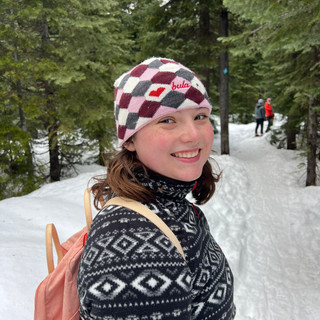
Being chronically ill and in college is not an easy or intuitive task. From navigating inaccessible buildings to advocating for your needs in a disability services office filled with strangers, it can often feel like you are fighting alone.
But the truth is, you aren't alone! I'm right there with you.
A cycle you may know all too well...
When I first got diagnosed with a chronic illness, I was 12 years old. My life shifted upside down overnight as I fought to understand what was wrong with me. By age 18 I had 10+ co-morbid conditions of my Ehlers Danlos Syndrome, was dependent on IV nutrition, had suffered over 10 concussions, and had an upcoming abdominal surgery. That's me today - sitting in the hospital bed and spilling my story out on paper in the hopes that it resonates with at least one person.
My chronic illness journey has directly translated to my work with websites. At The Paced Scholar, we believe in energy pacing as a tool to combat academic burnout. In fact, we are currently building a masterclass on our original framework! But just because we believe in energy pacing does not mean that it's easy to practice.
Most of the time I find myself thinking "I need to do more." If I could just finish this assignment and then set up TPN. If I could just eat this meal with friends. If I could just be... normal? That seems to be the word I'm searching for, but it doesn't feel quite right. Maybe because disabled people have always existed and are, in fact, normal parts of society. But I digress.
That inner clock is always ticking, telling me that I'm not quite good enough yet, that I can do more, that if I just tried harder I could get better. The reality is: I'm not getting better. I'm stuck in this painful body for the rest of my life, or at least to some degree I will be.
Every time the clock ticks I try to tune it out. I try my pacing framework: deep breaths, some poetry, maybe I'll dabble in a little sweet treat, who knows? But nothing can fully take away from the grating noise that reminds me that I am not where I want to be in life. So I dive into my work, hunched at my desk for hours as I try to understand how I will accomplish my dreams.
For a great deal of my college journey thus far I have been entirely isolated. My roommates thought that I was gross for my GI disorder, and so I turned away from them. My body stopped tolerating oral nutrition, and so I was confined to a hospital bed for a great deal of Winter and Spring term. Alone; suffering with the pain that I would never be like my peers. Not fully anyways.
So I brought out my phone, hit record, and posted it. I filmed my life and advocacy efforts and then went on to build The Paced Scholar in under 3 hours. Why? Because no one should feel alone, judged, or scared due to something they can't control.
So, yes, I'm right here with you. Every peer support group, every sensory-inclusive event, and every. single. moment. you. don't. feel. good. enough. I'm right here.

Community college and my burnout cycle
When I first started at community college I was cautiously optimistic and wildly ambitious. Despite my efforts to listen to my body, I ended up in the hospital. It was this "all or nothing" sort of cycle. First, I would do as many assignments as I could, staying up late just to write an essay that wasn't due for another month. Then, inevitably, my body would deteriorate and I would end up in the hospital. I would spend days upon days just laying looking up at the ceiling, pretending that this was not reality. I would drop out of my classes due to not being able to catch up. I felt as if there was not a soul in the world that knew what I was going through. So I researched, and I read, and I dived into my energy pacing. Because maybe, just maybe, if I understood the cycle then I could stop it in its' tracks.
And do you want to know what I realized?
Research indicates that students with chronic illnesses and disabilities are at a 70% to 254% greater risk for academic burnout than their non-disabled peers, and that up to 80% of all college undergraduates experience burnout. This cycle (to some degree) wasn't just happening to me, it was happening to most college students. Disabled or not.
Navigating Friends Despite Illness
So, we've established that college is not easy with a chronic illness. But what exactly is so hard about it? Let's name a few barriers I've personally experienced:
Barriers to Academics
Hospital admissions, ER visits, appointments, high symptom days = attendance issues.
Increased chronic pain from lecture hall chairs and long labs.
Inaccessible architecture (lots and lots of stairs that cause dizziness and joint pain).
Processing struggles due to my brain injuries.
Many disabled college students struggle with these barriers, but if I had to be completely honest, making friends is my hardest barrier as a disabled college student.
You might be a high schooler reading this post, wondering if you will make any friends or if your disability will stop you from meeting your BFF. I'll give you an honest answer: it might be hard, but it isn't impossible. Here are some barriers you may face socially as a disabled college student.
Social Barriers
Inaccessible hangout locations (stairs, not sensory-friendly, etc...)
Friends misunderstanding of your disability.
Having to cancel plans regularly.
Not being able to go to parties (flashing lights, drinking, sensory issues, etc...)
A lot of people will tell you the same thing when you talk about making friends in college: "the right friends will love you for who you are." The truth? It might be really really hard to find those people.
As a disabled person, your symptoms effect you more than anyone else. But that doesn't take away from the social impact it has on your friends. They might feel like your illness is too unpredictable, like you're too distant, or they might grossed out by some of your symptoms. This isn't your fault. It is a natural, real impact of having a disability.
We are not in a place in society quite yet where disabled people can exist without uncomfortable stares, judgy looks, or full understanding. I hope one day that we will be, but as of 2026 unfortunately that is just not how it works. However, don't let my words discourage you. Making friends with a disability is possible, you just may have to work harder at it than your peers. Here are some practical tips and frameworks for communicating your needs with friends. Get the full communication guide for $3.00 on the products section of my page (Note: the guide is coming soon).
Tips for Clear Communication in Chronically Ill Friendships
You don't have to explain your whole medical history, but it might help to share specifics about where you struggle.
"Sometimes I need to sit down because of my POTS."
"Sometimes I might seem a little spaced out."
I like to follow my struggles with an actionable step.
"Sometimes I might seem a little spaced out. I'm not ignoring you, my brain is just working overtime to process. You can help me by giving me time to catch up and checking to see if I understand what you're saying when I start to drift off."
Set clear expectations.
"I can't go to places my wheelchair doesn't fit."
"I might cancel plans a lot. I don't hate you, my illness is just unpredictable at times."
Having clear communication in friendships where one person is chronically ill is crucial, and it will serve you well to have these sorts of honest conversations as you become an adult.

The Paced Scholar and Our Peer Connection/Support Groups
As we've established, living with a chronic illness in college can be incredibly isolating. That is why The Paced Scholar is hosting peer connection and peer support groups! Through virtual, non-theraputic, non-medical meetings, you can connect with people going through similar struggles as you from the comfort of your own dorm room.
If that isn't your speed, check out our online groups, such as our neurodiversity group! You can share ideas, updates, appropriate rants, struggles, images, study tips, and more.
At the end of the day, you aren't alone. Many college students with disabilities struggle. The Paced Scholar is here to be a resource, a peer-led support network, and a disability advocacy hub. Visit us at www.thepacedscholar.com at anytime.
Stay curious,
Samantha
Founder of The Paced Scholar

Comments